
Diploma in Canine Adolescence
The adolescent dog isn't broken.
This stage just needs people who understand it.
Adolescence is the developmental window where more dogs are surrendered, rehomed, neutered prematurely, and put through aversive training than at any other point in their lives. Not because they're failing, but because the people around them haven't been taught what's actually happening.
This Level 4 diploma gives professionals and committed guardians the science, the framework, and the practical application to support dogs through this stage properly, without quick fixes, dominance theory, or methods that damage trust.
Price: 997+vat
Self-Paced • Lifetime Access • Certificate of Completion
Most behaviour professionals, trainers, behaviour consultants, walkers, groomers, daycare staff, fosterers, rescue assessors, were never taught what adolescence actually does to a dog. The hormonal shifts. The neurological rewiring. The fear periods. The collapse in extinction memory. The reason recall stops working at nine months even though it was solid at six.
Without that grounding, the standard advice in the industry defaults to neutering as a behaviour fix, more exercise, harder training, or "they'll grow out of it." None of these address what's actually happening, and several of them make it worse.
For guardians going through it themselves, the experience is just as disorienting. The dog you knew seems to have changed overnight. What worked stops working. And the louder voices online start recommending things that don't sit right.
This diploma replaces that with proper, evidence-based understanding of the adolescent dog and the practical decision-making that follows from it.
WHO THIS IS FOR...
This diploma is built for:
Behaviour professionals — trainers, behaviour consultants, and rehabilitators who want a deeper, evidence-led grounding in this developmental stage and the welfare issues that surround it.
Other canine professionals — walkers, groomers, daycare staff, fosterers, rescue and shelter assessors, and veterinary support staff who regularly work with adolescent dogs and want to recognise what's happening in front of them.
Engaged guardians — owners who want to understand their dog's behaviour at this stage properly, not just manage it, and who value force-free, science-led methods.
Some prior knowledge of canine behaviour is helpful. The course is pitched at professional level but is fully explained throughout and accessible to a motivated guardian.
WHAT'S INSIDE
Four modules. Essay-based assessments. Personal tutor feedback from Holly within 10 days. Your certification and badge upon completion to proudly display.
Module 1: Hormonal and Developmental Change
The biology of canine adolescence. Puberty as a process distinct from adolescence. The oestrous cycle and its behavioural impact. Hormonal influence on behaviour in both sexes — testosterone, oestrogen, progesterone, prolactin, oxytocin, vasopressin, serotonin. Phantom pregnancy, including persistent phantom pregnancy in spayed bitches. The physical changes that shape behaviour: growth, teeth, the microbiome, sleep.
Module 2: The Adolescent Brain
Neurological development across the adolescent period. The limbic system and prefrontal cortex, and why they mature on different timelines. The HPA and HPG axes and how they interact under stress. Apoptosis, neurogenesis, synaptic and dendritic pruning, myelination. The role of dopamine, serotonin, GABA, glutamate, and oxytocin in adolescent behaviour, risk-taking, and emotional regulation.
Module 3: Fear, Conflict, and the Neutering Question
Fear periods and the collapse of extinction memory during adolescence. Adolescent phase conflict behaviour and what it means for the dog–guardian relationship. The link between adolescence and surrender, rehoming, and behavioural euthanasia. The welfare cost of aversive training at this developmental stage. A science-led look at neutering, including the McGreevy and Starling studies, the behavioural fallout of pre-pubertal neutering, and the evidence on Suprelorin as a reversible alternative.
Module 4: Behaviour, Case Studies, and Practical Application
Common adolescent behaviours including reactivity and aggression, poor recall, frustration, resource guarding, social difficulties, and the disengagement that follows phasing out rewards too soon. The behavioural impact of hormonal change in both sexes. Five detailed case studies covering aggression and separation distress, persistent phantom pregnancy, indoor urination, biting and mouthing, and resource guarding - each tracking the assessment, management, training plan, and outcome.
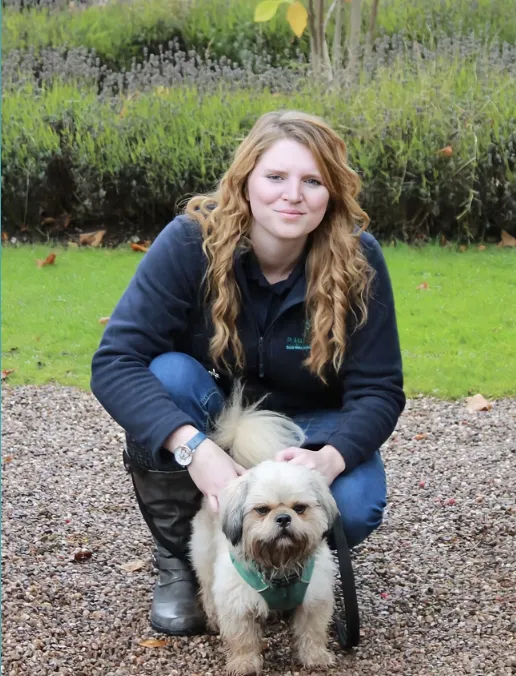
Written by Holly Leake - Certified Dog Trainer & Behaviour Consultant
Holly has spent nearly a decade across the canine profession, from managing professional dog-walking teams to tutoring for Canine Principles and ISCP. She specialises in puppyhood, adolescence, and complex behaviours including reactivity and resource guarding.
This diploma brings together her frontline casework with the evidence-based methods she teaches at professional level. It isn't theory for theory's sake. It's the kind of grounding that changes how you assess an adolescent dog, what you recommend to a client, and how you respond when behaviour starts to slide.
By the time you complete this diploma, you’ll…
Explain the hormonal and neurological changes of canine adolescents in clinical and client-facing terms.
Recognise adolescent phase conflict behaviour and distinguish it from underlying behaviour problems.
Assess whether a behavior is being driven by developmental change, hormonal fluctuation, or a separate issue requiring different intervention.
Discuss the behavioral evidence around neutering with clients and refer appropriately.
Identify and manage common adolescent behaviors - Reactivity, Resource guarding, Recall failure, Frustration, Social difficulty - using force-free, evidence-based methods.
Support guardians through this developmental stage in a way that reduces the risk of surrender, behavioral euthanasia, and the use of aversive methods.
And most importantly, you’ll be able to see this stage for what it is: not a problem to fix, but a phase to guide.
The details:

Format: 4 online modules, essay-based assessments
Feedback: Personal tutor feedback within 10 working days
Access: Instant, lifetime, any device
Certificate: Downloadable on completion
Prior knowledge: Some prior canine knowledge helpful
Age requirement: 18+
Guarantee: 14-day satisfaction guarantee, full refund, no questions asked
enrolment
PRICE: £997+vat
Self-Paced • Lifetime Access • Certificate of Completion
Covered by our 14-day satisfaction guarantee. If it’s not right for you, we’ll refund you in full. No questions asked.
Questions? Here are the ones we hear most.
Do I need previous qualifications to enrol?
No formal qualifications are required. Some prior knowledge of canine behaviour is helpful, and the course assumes a basic familiarity with dogs. Everything else is fully explained as you go.
How long will it take me?
This course is fully self-paced — no deadlines, no pressure. Most students work through it over a few weeks, fitting study around their life. You have lifetime access, so there’s no rush.
What does the assessment involve?
Each of the four modules includes an essay-based assessment (minimum 500 words). Your tutor will provide personal, constructive feedback within 10 working days, and you can resubmit to improve your score. The pass mark is 80%.
What certificate do I receive?
On successful completion, you’ll receive an official certificate from Canine Principles. This is fully downloadable and yours to keep.
I’m not sure I’m ready for a diploma. Is this the right level for me?
If you’ve completed the Canine Adolescence Intensive Challenge, you’re ready. You’ve already engaged with the core concepts — this diploma gives you the depth, the structure, and the qualification to go with it. If you want to chat about it before, we'd love to hear from you - email us at [email protected] and we'll come back to you!
What if I enrol and it’s not right for me?
We offer a 14-day satisfaction guarantee. If you’re not happy, contact us within 14 days for a full refund. No questions asked.
Adolescence is where most dogs are at risk.

Risk of being given up, mislabeled, neutered prematurely, or put through training that damages them long-term. That risk is largely a knowledge gap. This diploma is built to close it.
Follow Us


Exclusive News & Offers
Sign up today and be the first to know about new courses, exclusive discounts and freebies
Canine Principles
#Dog Skills For Humans
Canine Principles is a trading name of
CANINE PRINCIPLES LTD
Registered Company Number: 11458645
VAT Registration Number: GB300008875
CPD Provider Registered Number: 60082
The CPD Standards Office
UKPRN Registered Number: 10100845
Copyright © 2026 Canine Principles Ltd