 SEG Level 6 Diploma
The SEG Level 6 Diploma in Applied Canine Behaviour Management
A Batchelors degree-equivalent UK regulated qualification for ethical canine professionals ready to step into clinical-level practice
Delivered by Canine Principles · Cohort-based · Tutor-led · September 2026 cohort starts Monday 14 September
10 places per cohort. Hard cap.

A two-year, Batchelors degree-equivalent qualification in applied canine behaviour, regulated by Skills and Education Group (SEG) and delivered by Canine Principles, an approved SEG centre. Designed to map to the ABTC Clinical Animal Behaviourist Knowledge & Understanding framework, with a defined pathway via IICE membership toward ABTC CAB registration.
One qualification. One cohort. One focused offer. No upsells, no add-ons, no hidden modules.

The next step toward clinical animal behaviour, mapped out and supported.
Where you are right now
You’ve done the CPD. You’ve read the research. You can hold your own in a behaviour conversation with a vet, a colleague, or a thoughtful client. But there’s a layer underneath the work you do - the clinical layer, the evidence-led depth, the Batchelors degree-equivalent thinking - that you can sense but haven’t yet been able to access through CPD alone.
You feel it in your case work. The moments where you reach the edge of what you understand and want more. The cases that don’t behave the way the textbook predicts. The conversations with other professionals where you wish you could bring more weight to your position.


Who this is built for
The ethical canine professional who has reached the ceiling of Level 5 study and is looking for the next credentialed step.
- You’re already working as a trainer or behaviourist, or you’re about to be
- You hold a Level 5 qualification in canine behaviour (or recognised equivalent), are actively working toward one, or your prior learning and experience meets L5 equivalence via the Recognition of Prior Learning route
- You’re ethically committed: consent-based, force-free, fear-free, evidence-based
- You want clinical-level credentials and a defined route toward ABTC CAB registration
- You’re ready to commit to postgraduate-equivalent study over up to two years
We are upfront about this, because we’d rather you self-select out than start the qualification and find yourself in the wrong place.
- General dog guardians, hobbyists or first-time owners
- Rescue volunteers without an existing professional qualification or pathway
- Practitioners aligned with dominance theory, balanced training or any aversive methodology
- Anyone looking for fast-track certification, accelerated study, or “easy” Level 6
- Anyone wanting solo, self-paced study without cohort engagement
What you’ll become
By the time you complete the SEG Level 6 Diploma in Applied Canine Behaviour Management, you will be:
A regulated Level 6 (Batchelors degree equivalent) qualified practitioner in applied canine behaviour
Trained in the academic and reflective foundations of the ABTC CAB Knowledge & Understanding framework
Ready to progress via IICE membership toward ABTC CAB registration
Part of a small, ethically aligned cohort and a wider professional ecosystem that stays connected long after qualification
Equipped with the kind of clinical, evidence-led thinking that defines the best of the profession
We are honest about what the L6 alone does and doesn’t deliver. It is the academic foundation for clinical practice. It is not, on its own, ABTC CAB registration - that's a multi-step pathway involving case portfolio work after qualification. But it sets the foundation, builds the cohort, and lays out the route forward.
You’re already doing this work. Let’s give it the credit it deserves.
The qualification: what's inside
Nine modules, delivered sequentially over up to two years.
Theory of the Canine Mind
Nature Vs Nurture
Development of Canines
Canine Communication
Canines in Society
Canine Behaviour and Health
Research into Canine Behaviour
Practical Canine Behaviour Consults
Canine Behaviour Practice
Each module is released sequentially. You complete one before moving on to the next, so depth is protected and the cohort moves together. Assessment is portfolio-based: written work, reflective practice, case studies drawn from your own work, and the logged practical hours. There are no exams.
That quiet doubt? It’s not a lack of ability. It’s a lack of recognition.
What’s included
The qualification
- All nine modules of academic content and supporting materials
- Live cohort seminars and tutor-led group sessions
- 1:1 tutor support throughout the qualification
- All assessment, feedback, and quality assurance (internal and external)
- Your SEG Level 6 Diploma certificate on successful completion
- Up to two years to complete; extensions available at current rate
The ecosystem
- Two years' full access to the Canine Principles Skill Hub, 90+ workshops, webinars and certified courses (RRP £800+VAT)
- Skill Hub access provided instantly on enrolment, so you can begin CPD between application acceptance and cohort start
- Cohort peer community through and beyond the qualification
Skill Hub access starts immediately on enrolment - so you’re not waiting until September to get value. You can begin CPD the day your place is confirmed.
Five reasons this qualification is different
Ethical positioning that’s specific, not generic
We say it outright: consent-based, force-free, fear-free, evidence-based. We name what we won’t teach: dominance theory, balanced training, aversive methods. We don’t soften it, and we don’t accept current users of aversive methodology onto the cohort.
Cohort, tutor, and 1:1 - not solo grinding
The L6 market is dominated by self-paced isolation. We run small cohorts (10 places per cohort) with live seminars, 1:1 tutor support, and a peer group that stays connected through and beyond the qualification.
A real pathway toward clinical practice
The L6 isn’t an endpoint. It’s a step on a structured route via IICE membership toward ABTC CAB registration. We tell the truth about what that pathway requires and how long it takes, including the parts that happen after you graduate.
The Canine Principles ecosystem, not just a qualification
Skill Hub access (90+ workshops, RRP £800+VAT) included for two years. IICE community access. A cohort that stays connected long after qualification. You're joining an ecosystem of ethically aligned practitioners, not buying a single course.
Practitioner-led delivery
Delivery and assessment is by appropriately credentialed, currently-practising professionals - not theorists who haven’t seen cases. Tutor team details are confirmed ahead of cohort start.
The pathway toward ABTC CAB registration
The SEG Level 6 Diploma in Applied Canine Behaviour Management is designed to map to the ABTC Clinical Animal Behaviourist Knowledge & Understanding framework. On completion, graduates can progress via IICE membership toward ABTC CAB registration.
The route in plain English:
Complete the SEG L6 Diploma
The academic and foundational practical step
Join IICE (International Institute for Canine Ethics)
IICE is currently progressing its application to become an ABTC-recognised Practitioner Organisation for the CAB role, with approval anticipated before the first cohort completes the qualification.
Build your case portfolio under IICE supervision
Documented practical work in your own client setting
Submit for ABTC CAB assessment
Clinical Animal Behaviourist registration
The L6 sets you up for this journey. It does not deliver CAB status on its own, and we will not let anyone tell you otherwise, because the integrity of the pathway depends on practitioners understanding what it actually involves.
The investment
Qualification fee
VAT is calculated automatically at checkout based on your location. International tax is handled via Quaderno integration.
Payment plans are available at checkout via Klarna and Clearpay (UK only, subject to provider eligibility and limits). For international learners, or anyone wanting alternative arrangements, please reach out before applying.
What you get
- The qualification: nine modules, all assessment, IQA and EQA, SEG certificate on completion
- Two years’ full Skill Hub access (£800+VAT RRP)
- Live cohort seminars and 1:1 tutor support
- Cohort peer community
- Skill Hub access instantly on enrolment
What isn’t included
- Recommended reading (most texts available second-hand or via library)
- Costs associated with your own practice
- IICE membership fees (separate, post-qualification)
- ABTC registration fees (paid to ABTC at the relevant time)
14-day money-back guarantee
A statutory 14-day money-back guarantee from the date of your first payment, in line with UK Consumer Contracts Regulations 2013. Because Module 1 isn’t released until cohort start on 14 September, the L6 qualification itself remains fully refundable within the 14-day window. Accessing the Skill Hub (provided instantly on enrolment) waives the refund right for that portion under standard UK digital-content rules. Full terms are set out in the qualification T&Cs.
The application process
Cohort 1 is limited to 10 places. Because of that, and because we want every learner to thrive, we use a structured application process to make sure the qualification is right for each applicant.
Submit your written application
Allow 30–45 minutes. The form covers your academic background, your professional practice, your approach and ethics, your motivation and readiness, and a few logistical questions. We ask for enough detail to make a real decision; we don’t ask anything we don’t need.
If shortlisted, a 20-minute suitability conversation
Friendly, structured, online, recorded for quality. Not a viva. We verify a few things from your application, give you the chance to ask us anything, and decide together whether the qualification is the right fit.
We confirm your place or, if it isn’t the right fit, we tell you why
A respectful response either way. If we decline, we will often suggest an alternative pathway. If you’d like a brief written summary of what informed our decision, you can ask and we’ll send one.
A place is confirmed on payment. Photo ID is required from successful candidates as part of enrolment, standard practice for regulated qualifications.
Ten places per cohort. Hard cap.
The path is clearer than you’ve been told.
Key dates
| Sunday 12 July 2026 | Applications open (during the live masterclass) |
| Friday 31 July 2026 | Priority application deadline |
| 5pm Friday 7 August 2026 | Priority decisions communicated |
| Friday 4 September 2026 | Final application deadline |
| Friday 11 September 2026 | Final decisions communicated |
| Monday 14 September 2026 | Cohort starts, Module 1 released |
Limited Places Available
Ten places per cohort. Hard cap.
If demand exceeds capacity, a side-by-side second cohort may be opened starting the same date (decision by 7 August). If we don’t open a second cohort, suitable applicants who miss out are offered a confirmed place on the next intake, Monday 12 April 2027, without needing to reapply.
Priority applications are reviewed first. Once 10 places are paid, the cohort is closed.
About Canine Principles

Jo Middleton, CEO, Canine Principles
Canine Principles is an approved Skills and Education Group (SEG) centre, authorised to deliver and assess the SEG Level 6 Diploma in Applied Canine Behaviour Management. Canine Principles sits within a multi-brand ecosystem alongside ISCP (the International School for Canine Psychology & Behaviour) and IICE (the International Institute for Canine Ethics), all led by Jo Middleton, CEO.
Canine Principles is the hub for evidence-led, regulated qualifications and structured professional development with cohort-based delivery. The L6 is the flagship qualification at this level.
Meet the course team
The specialists who’ve written the curriculum, mark the work, and support you through it.
Course Authors

Danielle Beck MSc
Registered Clinical Animal Behaviourist (CAB)
Registered Clinical Animal Behaviourist (CAB) with over 20 years in practice, a Zoology background spanning domestic and non-domestic species, and founder of Control The Meerkat, a trauma-informed educational resource known for making complex neuroscience genuinely accessible. Also mentors professionals progressing towards clinical animal behaviourist status.
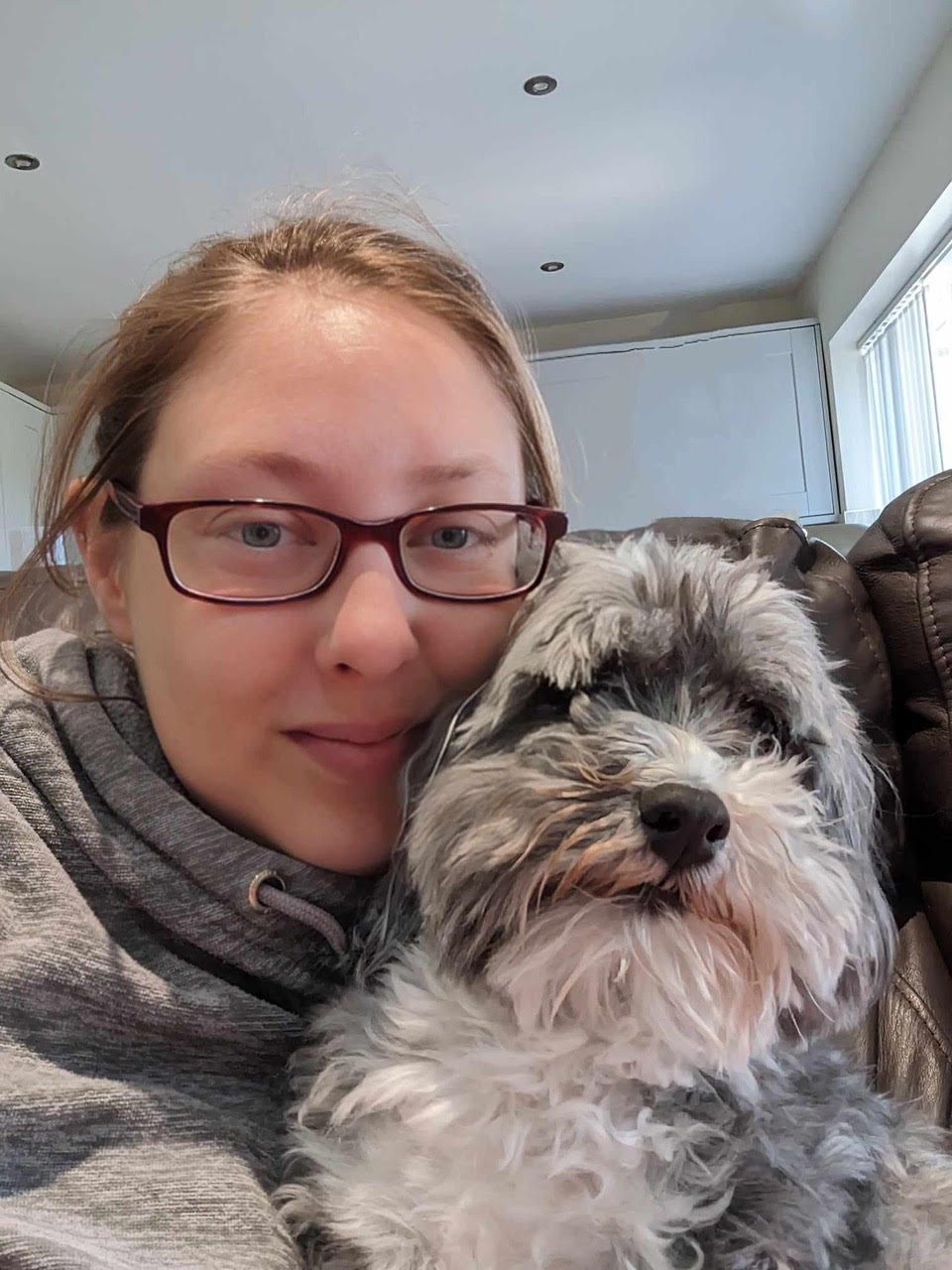
Nicole Parkinson BSc (Hons)
Canine Behaviourist & Trainer
Degree in Animal Behaviour and Welfare, five years as Course Manager in Animal Management at Reaseheath College (including lecturing on the Foundation Degree in Canine Behaviour and Training), and a Level 5 Diploma in Education and Training with assessor and internal verification awards. Runs her own behaviour practice working with cases including reactivity, aggression and separation anxiety.

Leza Bliss BSc (Hons) MAPDT
Animal Welfare Lecturer & Course Manager
Over a decade of further education experience as an Animal Welfare Lecturer and Course Manager at Moulton College, alongside senior instructor roles at Medical Detection Dogs. A qualified assessor and internal quality assurer (TAQA 3 and 4), combining exceptional canine training expertise with rigorous academic delivery.
Course Assessors
Nicole Parkinson BSc (Hons)
Canine Behaviourist & Trainer
As above — see Course Authors.

Ashley Szafranek MSc
Certified Clinical Animal Behaviourist (CCAB)
ABTC Registered Clinical Animal Behaviourist (CAB) and full member of the APBC, holding a Master’s with Distinction in Clinical Animal Behaviour from the University of Lincoln. Career spans clinical practice through her business Reach Your Pawtential, senior training and behaviour roles at Dogs Trust, and the UK’s first prison-based rescue dog training programme.
Pastoral Care
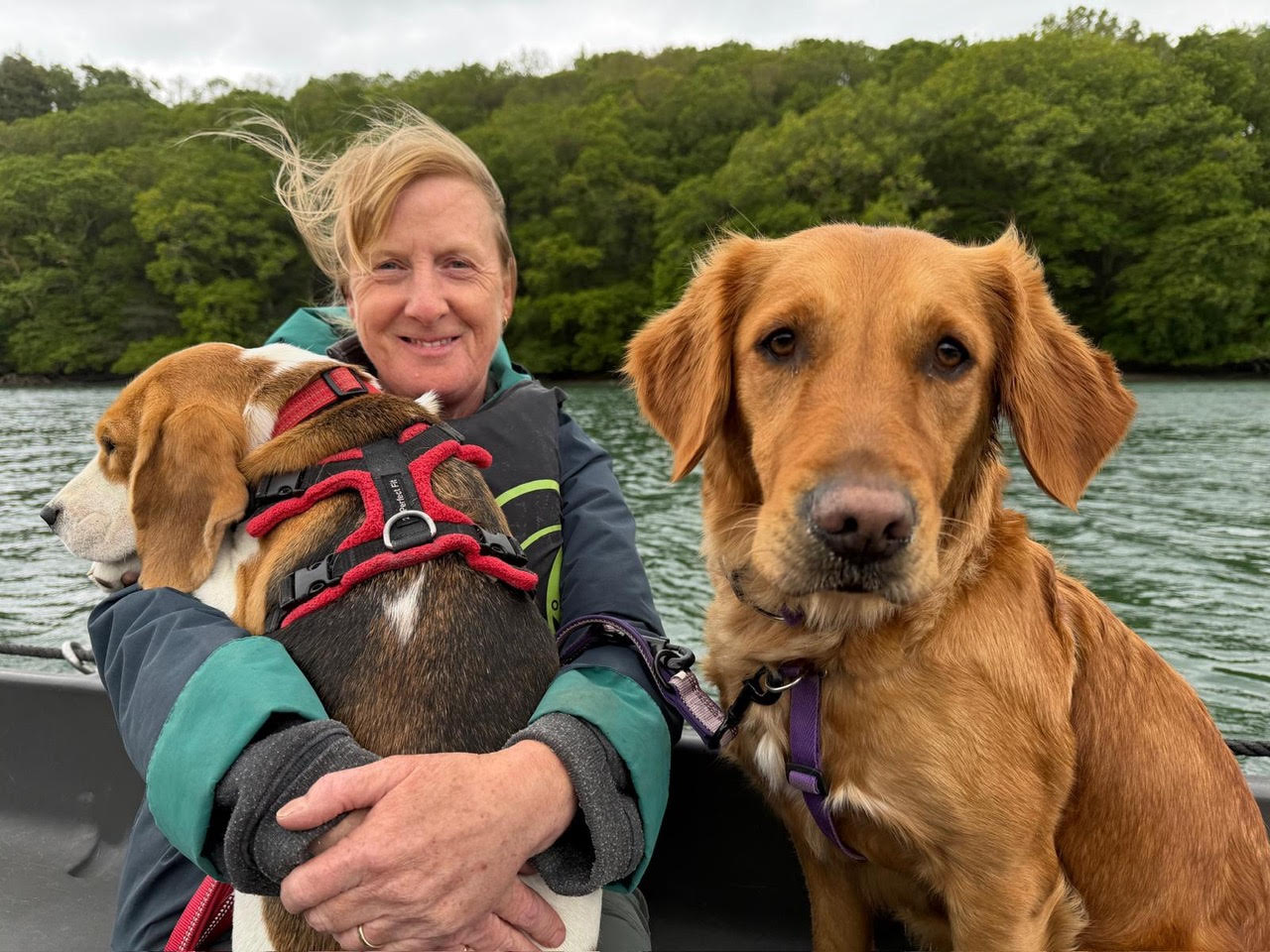
Liz Cox MSc
Pastoral Care Lead
Retired veterinary nurse with a Master’s degree in Animal Behaviour and Welfare, and founder of The Dog Nose, her Devon-based training and behaviour practice. With 30 years’ involvement in animal rescue and a career built on supporting both dogs and the people who care for them, Liz brings warmth, patience and real-world understanding to her pastoral care role, making sure every student feels supported throughout their studies.
Frequently asked questions
If you’ve been looking for a Level 6 route that takes ethics seriously… this is the qualification.
Ten places per cohort. The September 2026 cohort starts on 14 September. Applications close on 4 September. Priority applications close on 31 July.
Apply for the September 2026 CohortQuestions before you apply? Email us or reply to your most recent email from Canine Principles.